 GF reinforced-General grades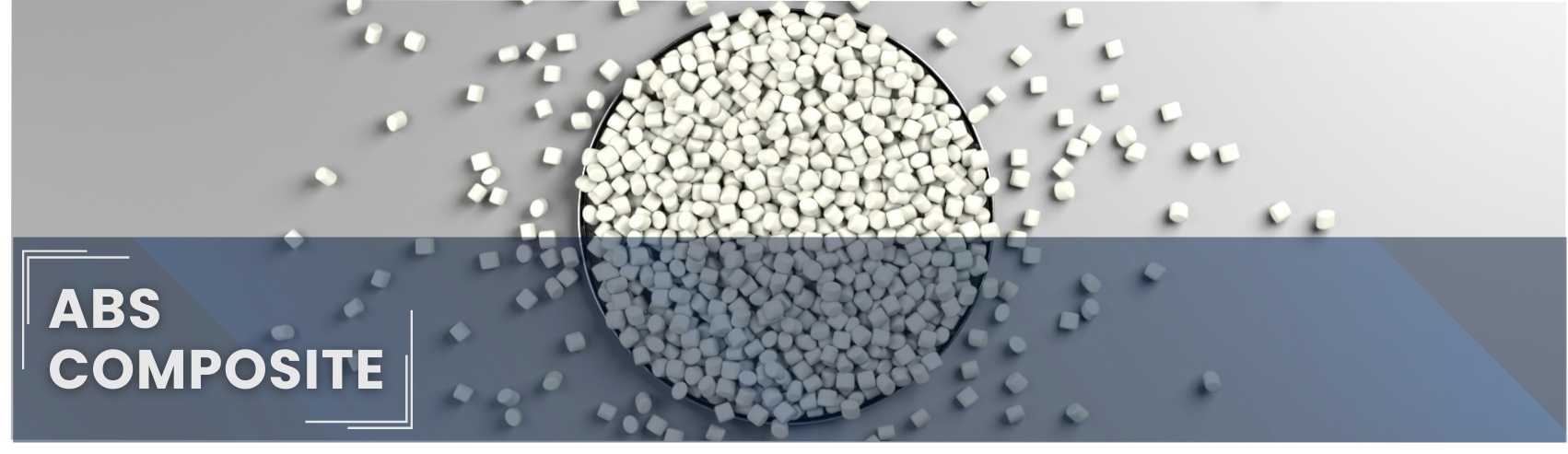
ABS Resin (Acrylonitrile-Butadiene-Styrene, ABS) is a widely used thermoplastic engineering plastic, recognized for its excellent mechanical properties and processability.
Mechanical Properties and Thermal Performance
- Impact Resistance: The impact strength of ABS resin typically ranges from 15 to 40 kJ/m², depending on the rubber component B content. High-impact ABS resins have higher impact strength, making them suitable for applications requiring high impact resistance.
- Heat Resistance: The heat deflection temperature (HDT) of ABS materials generally ranges between 80°C and 105°C, depending on the AS resin content. For applications requiring higher heat resistance, the HDT can be further increased by adding reinforcements such as glass fibers.
- Low-Temperature Performance: ABS resin maintains high impact strength even at low temperatures, typically remaining tough in environments ranging from -20°C to -40°C, making it suitable for use in low-temperature conditions.
- Chemical Resistance: ABS resin exhibits good resistance to acids, alkalis, and salt solutions but is more sensitive to certain organic solvents (e.g., ketones, ethers), which may cause swelling or surface damage. The chemical resistance data of ABS is typically evaluated based on specific chemicals and usage conditions.
Thermal Properties and Dimensional Stability
- Processability: ABS resin's melt flow rate (MFR) typically ranges from 2 to 30 g/10 min, making it suitable for various molding processes. Adjusting the resin formulation can accommodate different processing requirements.
- Thermal Deformation Resistance: ABS resin demonstrates good dimensional stability in high-temperature environments. The heat deflection temperature can be further enhanced above 110°C by adding reinforcements like glass fibers.
Material Structure and Performance
- Main Chain Structure: The structural characteristics of ABS resin allow it to deliver balanced performance in various applications. As the rubber component B ratio increases, the material's toughness improves, but its flowability and weather resistance may decrease.
- Influence of AS Resin Content: A higher AS resin content enhances the surface gloss, mechanical strength, chemical resistance, and processability of the material, though it may reduce impact strength.
Applications
- Wide Applications: ABS resin is widely used in the machinery, automotive, electronics, instruments, textiles, and construction industries, especially in applications demanding high impact resistance, dimensional stability, and surface gloss.
- Product Types: Depending on the specific application requirements, ABS resin can be formulated into high-impact, medium-impact, general-impact, and specialty-impact types to meet different usage conditions.